Austin’s History Told Through Neighborhoods and Sites
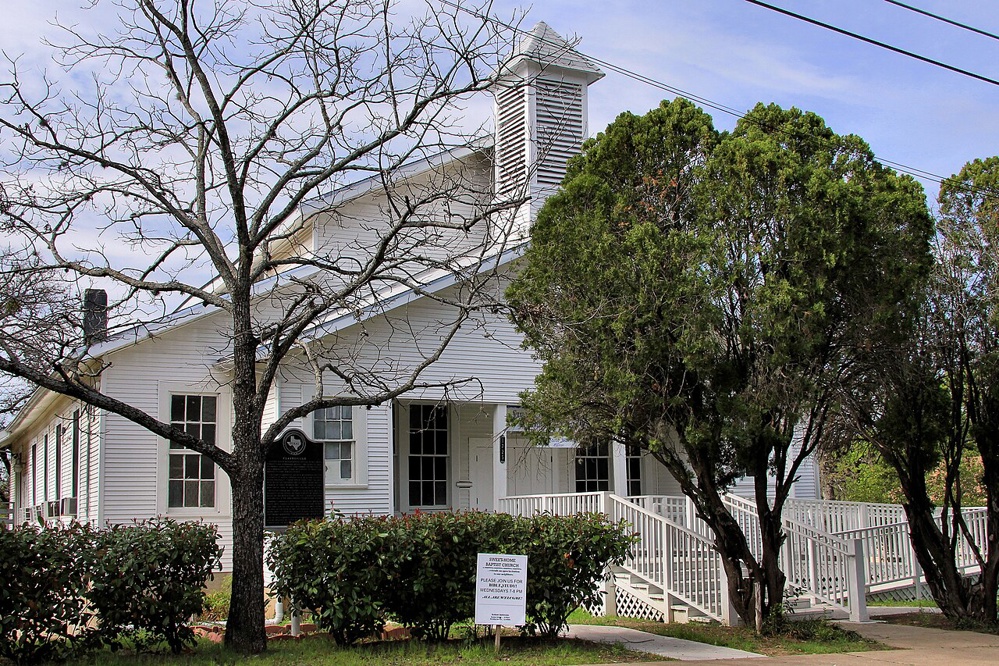
Austin’s story unfolds block by block, from early Republic-era landmarks to freedmen communities, streetcar suburbs, and carefully planned residential districts. Neighborhoods like Clarksville, Hyde Park, and Aldridge Place, along with downtown landmarks such as the Bremond Block and the French Legation, reveal how political shifts, segregation, architecture, and urban growth shaped the city.
Some neighborhoods that once featured quiet historic homes are rapidly changing as new developments rise and demand reshapes the skyline, like the evolution of Rainey Street’s historic bungalows into a vibrant cocktail and dining district.
Walking through these areas today offers a layered understanding of how Austin evolved from a frontier capital into a modern cultural hub.
Old West Austin and Clarksville: A Freedmen Community That Endured
Clarksville was founded in 1871 by Charles Clark, a formerly enslaved man who purchased land west of downtown and subdivided it for other freedmen. It is widely recognized as Austin’s oldest surviving freedmen community, and one of the oldest west of the Mississippi River.
The land was originally part of a larger tract owned by former Texas Governor Elisha M. Pease. After the Civil War, portions of the land were sold or transferred, and Black families established homes, churches, and schools. Clarksville grew into a tight-knit neighborhood anchored by institutions like Sweet Home Missionary Baptist Church.
Low-lying terrain and flood concerns discouraged large-scale redevelopment for decades, which inadvertently helped preserve the community’s footprint. Today, Clarksville remains a residential neighborhood with preserved historic homes and markers honoring its origins.
Austin History Timeline: Key Dates to Know
Austin’s neighborhoods tell the city’s story in layers, and a few key dates help anchor what you’re seeing as you explore.
- 1841 – The French Legation is built during the Republic of Texas era, reflecting Austin’s early role as a diplomatic capital.
- 1871 – Clarksville is founded by Charles Clark, becoming Austin’s oldest surviving freedmen community.
- 1891 – The electric streetcar line opens, fueling growth in neighborhoods like Hyde Park and reshaping Austin’s development patterns.
- 1912 – Aldridge Place is platted, reflecting early 20th-century planning ideals and the City Beautiful movement.
- 1928 – Austin adopts its City Plan, a turning point that redirected Black civic life and institutions into East Austin.
- 1970 – The Bremond Block is added to the National Register of Historic Places, marking a major milestone in local preservation.
Hyde Park: Austin’s First Streetcar Suburb
In the early 1890s, developer Monroe M. Shipe established Hyde Park as Austin’s first planned suburb. Marketed initially to white residents during the era of segregation, Hyde Park was connected to downtown by electric streetcar service beginning in 1891, running along Guadalupe Street.
Shipe incorporated amenities such as tree-lined streets and a recreational pavilion, promoting the neighborhood as an orderly residential escape from the urban core. Over time, as Austin expanded and the streetcar network grew, Hyde Park transitioned into a more middle-class district.
Today, Hyde Park is known for its Victorian homes, Craftsman bungalows, and Colonial Revival houses, many of which date to the late 19th and early 20th centuries. The neighborhood remains one of Austin’s most architecturally cohesive historic districts.
The Bremond Block: Downtown’s Victorian Legacy
The Bremond Block Historic District, located just west of downtown, preserves a collection of 19th-century homes built by the prominent Bremond family between the 1850s and early 1900s. The district contains eleven historic residences, representing styles such as Greek Revival, Italianate, and Queen Anne.
Eugene Bremond and his descendants played major roles in Austin’s mercantile and banking industries. The homes remain one of Texas’s best-preserved clusters of Victorian-era residences and were listed on the National Register of Historic Places in 1970.
While sometimes described as one of only two intact Victorian blocks in America, that claim is overstated. However, it remains one of the most cohesive preserved Victorian residential groupings in Texas.
West Austin’s Craftsman Era (1900–1930)
Between 1900 and 1930, Austin saw a wave of Craftsman-style bungalows, influenced by the national Arts and Crafts movement. These homes featured low-pitched roofs, wide eaves, exposed rafters, and prominent front porches designed to encourage neighborhood interaction.
Craftsman homes spread through areas including Hyde Park, Travis Heights, and parts of West Austin. Pattern books and kit-home designs made this style accessible to middle-class families. The emphasis on simplicity, natural materials, and built-in cabinetry reflected changing tastes and economic realities of early 20th-century Austin.
Aldridge Place and the City Beautiful Movement
Platted in 1912 by former Austin mayor Lewis Hancock, Aldridge Place embodied principles of the City Beautiful Movement, which emphasized planned streetscapes, aesthetics, and civic pride.
The neighborhood included deed restrictions regulating setbacks and residential construction. Sidewalks, tree-lined streets, and underground utilities helped preserve visual cohesion. Architectural styles across Aldridge Place include Colonial Revival, Tudor Revival, and Spanish Eclectic, many designed by local architects such as Hugo Kuehne and Edwin C. Kreisle.
Aldridge Place remains one of Austin’s most intact early 20th-century planned neighborhoods.
The French Legation: A Republic of Texas Landmark
Built in 1841, the French Legation is one of Austin’s oldest surviving buildings from the Republic of Texas era. It was constructed for French diplomat Alphonse Dubois de Saligny, after France formally recognized Texas independence in 1839.
Though Saligny occupied the residence only briefly, the site remains a key link to Austin’s diplomatic history. The building reflects French Colonial influences with Greek Revival elements and now operates as a historic museum site open to the public.
Contrary to some accounts, the capital of Texas did not permanently move to Washington-on-the-Brazos in 1842, though it was temporarily relocated during the Archive War. The French Legation was later occupied by various residents and preserved as a historic site.
Tejano and Mexican American Austin: Neighborhoods Shaped by Culture and Resilience
Austin’s history is not only told through freedmen communities and streetcar suburbs. It is also told through the long-standing presence of Tejano and Mexican American families, whose neighborhoods helped define the city’s cultural identity well before Austin became a modern boomtown.
In the late 1800s and early 1900s, Mexican American communities grew around areas tied to labor, rail corridors, and service economies, including parts of East Austin and the near south side. Over time, neighborhoods such as Holly, Govalle, and sections of South Austin developed deep cultural roots through family networks, local churches, small businesses, and community events.
One of the most enduring cultural centers is the area around Our Lady of Guadalupe Catholic Church, which has long served as a spiritual and community anchor for Mexican American Austinites. Austin’s food traditions, music culture, and civic life have also been shaped by generations of Tejano residents, even as the city’s demographics shifted.
Today, these histories remain visible through long-running cultural institutions, historic churches, and neighborhood landmarks. They also show up in the ongoing efforts to preserve local identity amid rapid redevelopment and rising property values.
Architecture Across Austin’s Historic Districts
Austin’s architectural story spans multiple districts, including:
- Bremond Block – Victorian-era homes
- Clarksville – Late 19th-century freedmen residences
- Hyde Park – Streetcar suburb architecture
- Travis Heights – Early 20th-century revival styles
- Old Enfield & Pemberton Heights – Tudor and Colonial Revival estates
In neighborhoods like Pemberton Heights, steeply pitched roofs and decorative half-timbering reflect Tudor Revival influence. Meanwhile, Craftsman bungalows throughout Hyde Park emphasize horizontal lines and open porch designs.
Freedmen Communities Beyond Clarksville
Clarksville was not the only freedmen settlement in the Austin area. Communities such as Kincheonville, Burditt’s Prairie, and settlements in South Austin formed between the late 1860s and 1880s.
These communities typically centered around churches and schools, serving as social and economic anchors during Reconstruction and beyond. Land ownership among Black Texans increased significantly after emancipation, though gains were uneven and often challenged by discriminatory policies and racial violence.
These neighborhoods helped shape Austin’s cultural foundation and continue to influence the city’s identity today.
Redlining, Segregation, and the 1928 Austin City Plan
To understand why Austin’s historic neighborhoods developed so differently, you have to understand how policy shaped the map.
In 1928, Austin adopted a city plan that reshaped growth for decades by encouraging the relocation of Black schools, churches, and civic institutions to what is now East Austin. While the plan did not use the word “redlining” in the modern sense, it aligned with the era’s broader segregationist practices by concentrating services and public investment in white neighborhoods while pushing Black community infrastructure eastward.
This shift had long-term consequences. East Austin became the center of Black cultural life, but it also faced systematic underinvestment in sidewalks, drainage, and public amenities for generations. At the same time, areas west of Interstate 35 saw stronger infrastructure investment, easier access to financing, and more stable property values.
Today, the legacy of that 1928 plan still shows up in Austin’s neighborhood boundaries, historic districts, and the city’s ongoing conversations about equity, displacement, and redevelopment.
Historic Landmarks and Walking Tours You Can Explore
Many of Austin’s historic neighborhoods are walkable and publicly accessible.
Popular routes include:
- Congress Avenue, often called the “Main Street of Texas,” connecting the Capitol to the river
- South Congress (SoCo), blending historic structures with modern businesses
- East Austin, including the George Washington Carver Museum
- Downtown West and the Bremond Block, showcasing Victorian residences
The Austin Visitor Center offers guided walking tours, and several private tour companies provide themed neighborhood experiences. Self-guided tours are also available through city brochures and preservation organizations.
Exploring these areas offers one of the clearest ways to understand how Austin’s political, racial, and architectural history intersects in everyday streetscapes.