Calendar of the Hidden Planet: Key Moments That Built the Nibiru Myth
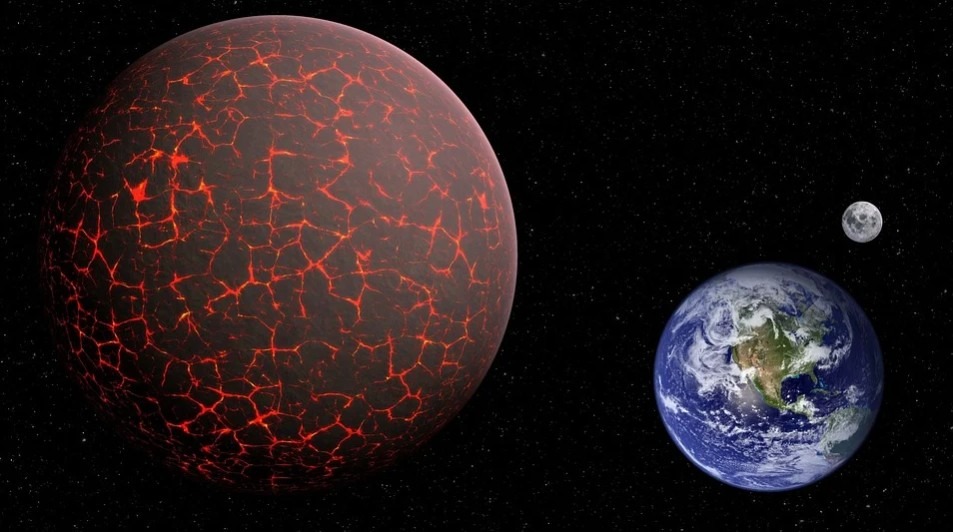
Nibiru has one of those internet-proof origin stories: it sounds ancient, it sounds scientific, and it comes pre-loaded with drama. That’s why it keeps resurfacing like a reboot. The word is real. The fear is real. The planet—at least in the doomsday sense—never is.
What makes the Nibiru myth so durable isn’t a single piece of “evidence.” It’s the way the story was built over time. Each era added a layer: an ancient term, a bestselling book, an early-internet prophet, a viral deadline. By the time you reach the 2010s, Nibiru isn’t one claim anymore. It’s a whole cinematic universe of hidden knowledge, imminent catastrophe, and screenshots that “they don’t want you to see.”
Here’s the timeline that turned a Babylonian astronomy term into pop culture’s most persistent hidden-planet villain.
What Nibiru Actually Meant in Ancient Babylon
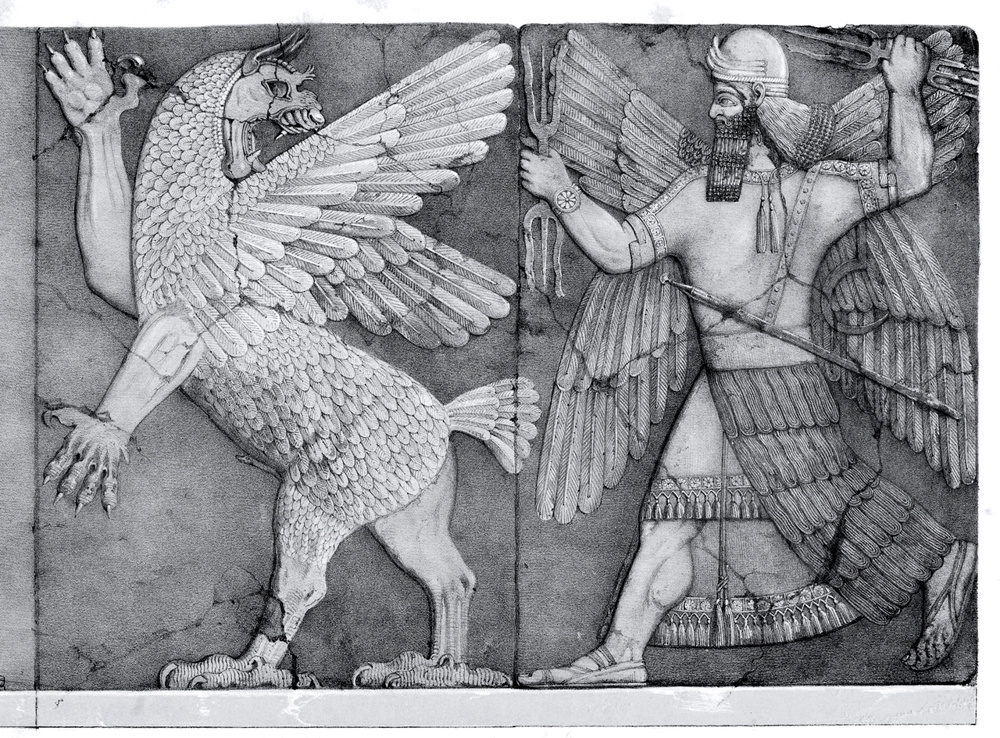
In ancient Babylon, Nibiru wasn't a rogue planet hurtling toward Earth—it was an Akkadian word meaning "crossing" or "point of transition." The term appeared frequently in cuneiform texts with multiple related meanings, including "place of crossing," "ferry boat," and "crossing fee." This is all connected to the practical realities of navigating Mesopotamia's river systems.
When Babylonian astronomers applied this term to the heavens, they identified Nibiru with Jupiter, describing it as dividing and crossing the sky. The MUL.APIN cuneiform text explicitly documents this identification.
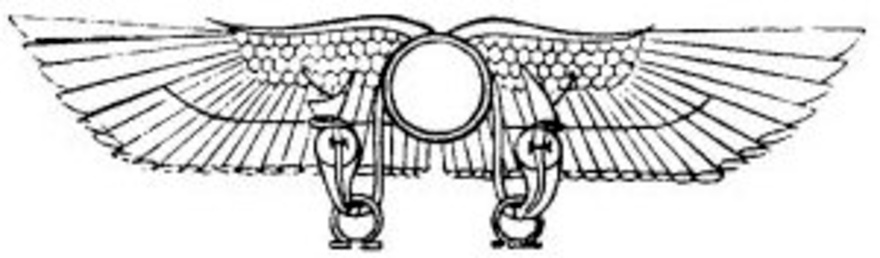
Nibiru's astronomical significance centered on serving as a celestial reference point—what texts called "the passageways of heaven and earth." This wasn't catastrophic mythology; it was practical navigation tied to Mesopotamian geography and religious cosmology, representing Marduk's supreme authority over celestial order.
How a 1976 Book Created the Modern Nibiru Myth
While ancient Mesopotamians saw Nibiru as Jupiter marking celestial pathways, the modern apocalyptic version emerged from a single 1976 publication. Zecharia Sitchin's "The Twelfth Planet" introduced alternative interpretations of ancient texts, claiming Sumerian tablets revealed a hidden planet with extraterrestrial inhabitants called the Anunnaki.
Using self-taught Sumerian knowledge, Sitchin rejected academic consensus and reinterpreted cuneiform writings to support his narrative. He proposed these aliens genetically engineered humans 450,000 years ago as slave laborers for gold mining. Sitchin claimed Nibiru follows a retrograde orbit with a period of approximately 3,600 years, bringing it periodically close to Earth.
The book's mythical impact on popular culture proved extraordinary—selling millions of copies in over 25 languages and spawning the "Earth Chronicles" series. This single work transformed Nibiru from an astronomical reference point into a comprehensive extraterrestrial creation myth that continues influencing conspiracy theories today.
1995–2003: The Internet Era Gives Nibiru a Deadline
Sitchin supplied the mythology. The internet supplied the distribution. But Nancy Lieder supplied the countdown clock. In 1995, Lieder launched ZetaTalk, claiming she received messages from extraterrestrials through a brain implant. Her contribution to the Nibiru universe is crucial because she merges two things that don’t naturally belong together:
- the “Nibiru” storyline (as popularized by Sitchin), and
- the older “Planet X” idea (a general concept of an unknown planet)
When she declares that Planet X and Nibiru are the same thing, she gives the myth a new advantage: it can borrow scientific-sounding language (“Planet X”) while keeping the ancient-mystery vibe (“Nibiru”). Then she does the most powerful thing a prophecy can do: she assigns a date.
Her prediction pinned catastrophe to May 27, 2003, complete with cinematic details (Earth’s rotation stopping, a pole shift, global devastation). That date matters historically because it transforms a floating myth into a social event. It creates a “before” and “after.” It turns believers into watchers.
It turns the internet into a waiting room. And when 2003 passes without incident, the myth doesn’t die—it evolves. Lieder’s framing (“white lie,” deception, shifting explanations) demonstrates one of the core survival tricks of modern apocalypse culture: failed predictions don’t end the story; they generate new seasons.
Why 2012 Became Nibiru's Most Famous Doomsday Date
Lieder's May 2003 prediction failed spectacularly, leaving her followers to rationalize the non-event while searching for the next apocalyptic deadline. The Maya Long Count calendar's completion on December 21, 2012—marking 13 b'ak'tuns since 3114 BC—provided the perfect replacement.
Astronomical interpretations of Mayan glyphs, particularly an inscription mentioning Bolon Yokte "descending from the sky," fueled speculation about planetary catastrophe. Nibiru proponents abandoned 2003 and migrated toward this culturally resonant date. Multiple apocalyptic theories converged: galactic alignment, solar maximum, interaction with Sagittarius A*. Terence McKenna's Timewave zero graph purported to show a peak in novelty corresponding with December 21, 2012, adding pseudoscientific credence to the doomsday predictions.
Media promotion of apocalyptic narratives through books, films, and tabloid coverage amplified public awareness. Writers seeking profit connected unrelated doomsday scenarios to the calendar endpoint. It created a unified framework that attracted diverse believer communities and transformed 2012 into Nibiru's most famous predicted arrival.
Design your own event calendar to share important dates with friends or your community.
The Viral Era: How Nibiru Became a Visual Conspiracy
After 2012, the Nibiru myth became increasingly image-driven, because the internet is. By the mid-2010s, “Nibiru proof” often looked like:
- a bright orb near the sun (lens flare)
- a zoomed-in sky screenshot with dramatic arrows
- a blurry “NASA leak” clip
- claims of censorship (Google Sky, redacted patches, hidden coordinates)
The myth thrives here because images feel like receipts. They let people bypass the hard part (astronomy) and jump straight to the emotional conclusion (something is being hidden). It also fits social media’s logic: screenshots travel faster than explanations.
A debunk requires context. A hoax requires only a caption. Nibiru becomes the perfect “hidden planet” trope for the internet because it converts easily into content: react videos, threads, TikToks, and constant re-uploads of the same imagery with new panic language.
Planet Nine: The Scientific Plotline That Conspiracies Keep Hijacking
Here’s where the timeline gets confusing for casual readers: there is a real scientific conversation about a distant possible planet—often referred to as “Planet Nine.” But Planet Nine is not Nibiru.
Planet Nine is a hypothesis based on patterns in the orbits of some distant Kuiper Belt objects. If it exists, it would be extremely far away, and it would not be on an Earth-collision path. It’s the opposite of a doomsday planet: distant, cold, hard to see, and interesting precisely because it explains subtle gravitational effects—not because it threatens us.
Still, conspiracies love this storyline because it offers a recurring pop-culture trick: laundering myth through real headlines. If you can say “scientists admit there’s another planet,” you can imply the rest—even when the rest is fiction. This is one reason Nibiru never leaves the internet: it can constantly attach itself to legitimate science without ever becoming legitimate science.
The Scientific Evidence Against Nibiru's Existence
Despite decades of apocalyptic predictions, no credible astronomical evidence supports Nibiru's existence. You'll find that comprehensive astronomical surveys have repeatedly proven no massive planet lurks in our solar system. If such an object existed, you'd see it with basic telescopes—detection would be unavoidable.
The predictable solar system dynamics you observe today directly contradict Nibiru claims. A planet repeatedly visiting the inner solar system would've permanently disrupted planetary orbits billions of years ago. You'd still detect those gravitational effects now.
NASA and major scientific institutions have categorically rejected Nibiru's existence. Modern detection capabilities eliminate any possibility of a hidden planet matching the hypothesis. Alternative explanations, from random Kuiper Belt distributions to modified gravitational theories, account for observed anomalies without invoking mythical planets. Scientists compare Nibiru to flat Earth theories, part of a broader movement pushing back against established scientific understanding.
The Reality Check: Why Nibiru Doesn’t Work as Astronomy
No matter how compelling the timeline is, the physical universe is stubborn. A massive planet repeatedly entering the inner solar system would have consequences that are hard to hide and impossible to “hand-wave” away:
- it would be visible well before impact
- it would measurably disturb planetary orbits
- it would leave a gravitational signature astronomers could detect
That’s why mainstream scientific institutions have consistently rejected Nibiru claims. The doomsday version doesn’t fail because people didn’t look hard enough—it fails because the solar system doesn’t behave that way. So why does the myth survive anyway? Because it isn’t just an astronomy claim. It’s a story about distrust, status, and control: they’re lying, we’re awake, disaster is coming, and we have the secret map.
Conclusion
The Nibiru myth is a timeline of storytelling upgrades. Ancient term becomes alien world. Alien world becomes internet prophecy. Prophecy gets a date. The date fails. The myth finds a new date. The myth becomes visual. The visuals become viral. Real science gets pulled in as seasoning.
The cycle repeats. Nibiru never leaves the internet because it doesn’t need to be real to function. It’s a template for the kind of fear the modern web spreads best: cosmic, vague, screenshot-friendly, and endlessly renewable. And in a culture trained to treat reality like content, that kind of myth doesn’t disappear—it just waits for the next deadline.