DFW Metroplex History: Places That Shaped the Region
The Dallas–Fort Worth Metroplex did not form overnight. Strategic infrastructure projects, transportation links, military investment, and cultural institutions gradually transformed two rival frontier towns into one of the largest metropolitan regions in the United States.
Railroads connected Dallas and Fort Worth in the 1870s, the Fort Worth Stockyards (established 1889) cemented Cowtown’s livestock identity, and Dallas expanded as a banking and commercial center. The opening of Dallas/Fort Worth International Airport (DFW Airport) in 1974 physically united the region.
World War II aerospace facilities, including Air Force Plant 4 in Fort Worth and North American Aviation in Grand Prairie, positioned North Texas as a long-term defense manufacturing hub. Cultural landmarks such as the Kimbell Art Museum, Bass Performance Hall, and Meyerson Symphony Center continue shaping each city’s public identity.
How DFW Airport United Two Rival Texas Cities
For much of the late 19th and early 20th centuries, Dallas and Fort Worth competed fiercely for economic dominance in North Texas. Aviation intensified that rivalry. Dallas developed Love Field beginning in 1917, while Fort Worth operated its own municipal airport.
By the late 1950s, federal aviation officials determined that separate major commercial airports within such close proximity were inefficient. In 1961, the Federal Aviation Administration announced that federal funding would not support two competing large commercial airports serving the same market. That decision compelled both cities to collaborate on a single regional facility.
Planners selected a site roughly midway between Dallas and Fort Worth, ultimately assembling approximately 17,000+ acres. Governance was structured through a joint board appointed by both cities. When DFW Airport opened in January 1974, it featured four terminals arranged in a semicircular design and multiple runways built for future expansion.
Today, DFW International Airport ranks among the busiest airports in the world and remains one of the clearest examples of regional cooperation overcoming long-standing rivalry.
Telegraph Lines and Railroads That Connected Dallas and Fort Worth
Long before aviation reshaped the region, railroads established the first permanent economic link between Dallas and Fort Worth.
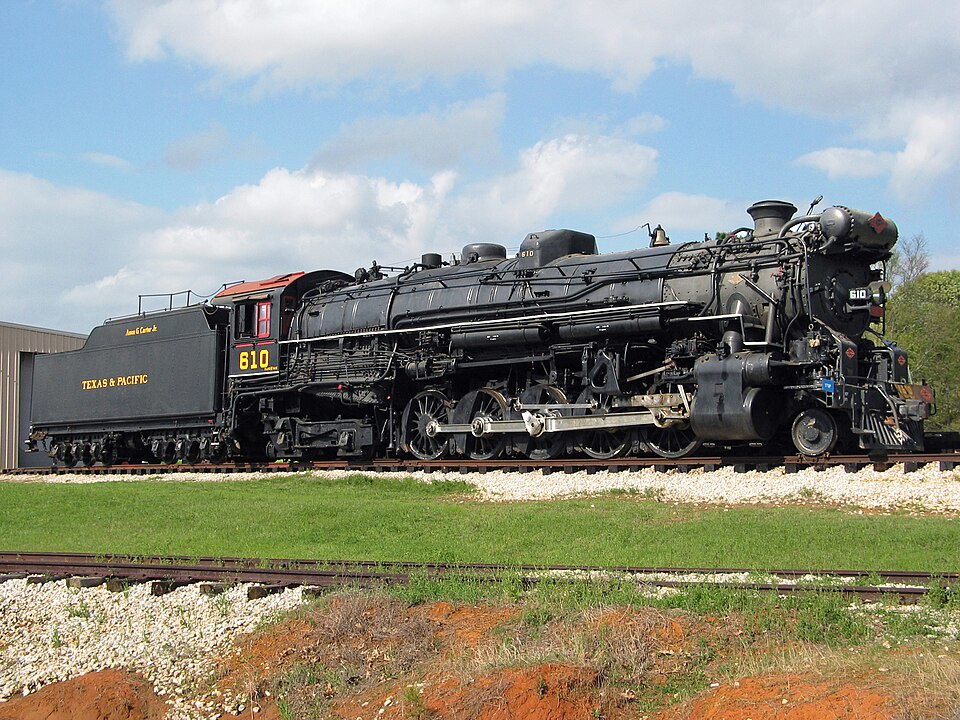
The Texas & Pacific Railway reached Dallas in 1873. Construction delays slowed westward progress, but Fort Worth residents organized local efforts to complete the critical connection. The first through train reached Fort Worth in July 1876, ending the city’s brief period of economic stagnation that earned it the nickname “Panther City.”
By the 1880s, additional lines—including the Fort Worth & Denver City Railway and the St. Louis Southwestern Railway (the “Cotton Belt”)—expanded North Texas rail access. Telegraph lines often followed rail corridors, accelerating communication and commerce.
These transportation corridors transformed isolated frontier settlements into commercial centers and laid the groundwork for the integrated Metroplex that exists today.
Interstate Highways That Unified the Metroplex
The construction of Interstate 30 and the split branches of Interstate 35E (Dallas) and Interstate 35W (Fort Worth) during the mid-20th century reshaped regional mobility.
Interstate 30 created a direct east-west connection between the two cities, reducing travel time and encouraging suburban development between them. Interstate 35E and 35W converge north of the Metroplex, reinforcing Dallas and Fort Worth as dual urban anchors within one regional system.
These highways accelerated commercial development in Arlington and other mid-cities communities, strengthening the idea of a unified “DFW” region rather than two isolated municipalities.
Fort Worth's Stockyards vs. Dallas's Banking District
Though railroads physically connected the cities, their economic identities diverged.
The Fort Worth Stockyards, formally established in 1889, quickly became one of the largest livestock markets in the Southwest. The Livestock Exchange Building, completed in 1902, anchored the district. By the early 20th century, major meatpacking companies including Swift and Armour operated plants nearby.
At its peak in the mid-20th century, the Stockyards processed millions of cattle annually and earned Fort Worth its enduring “Cowtown” reputation.
Meanwhile, Dallas developed as a financial and commercial hub. Banks, insurance firms, and wholesale distributors concentrated downtown. By the early 1900s, Dallas had positioned itself as a regional trade center for cotton and oil industries, eventually growing into the financial heart of North Texas.
The contrast between Fort Worth’s livestock economy and Dallas’s business-oriented expansion shaped the distinct identities both cities still maintain.
The Texas Oil Boom and the Rise of Dallas Banking
The discovery of oil at Spindletop in 1901 triggered rapid industrial and financial expansion across Texas. Dallas positioned itself as a banking and insurance hub to manage oil-related capital flowing through North Texas.
By the 1920s and 1930s, Dallas banks financed drilling operations, refineries, and pipeline infrastructure throughout the state. Financial institutions expanded alongside insurance companies and wholesale trade businesses.
During the mid-20th century, oil wealth fueled downtown skyscraper construction and strengthened Dallas’s identity as the region’s financial center. This banking infrastructure later supported corporate relocations and telecommunications growth, reinforcing Dallas’s long-term economic influence within the Metroplex.
Military Bases That Made DFW an Aerospace Powerhouse
World War II dramatically reshaped the Metroplex’s industrial future.
Fort Worth Army Air Field opened in 1942 adjacent to Air Force Plant 4, where Consolidated Aircraft (later Convair) produced thousands of B-24 Liberator bombers during the war. The facility later manufactured aircraft including the B-36 Peacemaker and the F-111 Aardvark.
In nearby Grand Prairie, North American Aviation produced thousands of military aircraft during WWII, including AT-6 trainers and P-51 Mustangs.
Today, the Fort Worth facility—now operated by Lockheed Martin—produces the F-16 Fighting Falcon and F-35 Lightning II, employing tens of thousands across North Texas. The continuity of defense manufacturing from the 1940s to the present established DFW as a cornerstone of American aerospace production.
Texas Instruments and Dallas’s Technology Expansion
Founded as Geophysical Service Incorporated in 1930 and renamed Texas Instruments (TI) in 1951, the company became a cornerstone of Dallas’s transformation into a technology center.
In 1958, TI engineer Jack Kilby invented the integrated circuit, a breakthrough that helped launch the semiconductor age. This innovation earned Kilby the Nobel Prize in Physics in 2000.
Texas Instruments’ growth established Dallas as an early leader in electronics manufacturing, defense technology, and semiconductor development. The company’s presence helped attract other technology firms and research operations, laying the groundwork for North Texas’s modern telecommunications and technology sectors.
The Trinity River and Regional Flood Control Efforts
Flooding along the Trinity River historically threatened both Dallas and Fort Worth. Major flood events in the early 20th century prompted federal and local flood control initiatives.
By the 1930s and 1940s, levees, reservoirs, and channel improvements were constructed to protect urban areas. In Dallas, levee systems enabled industrial development west of downtown.
In recent decades, the Trinity River Corridor Project has focused on flood protection upgrades, recreation areas, and environmental restoration. While the project has evolved over time, flood mitigation remains its central purpose.
The Trinity River’s management has shaped land use patterns, infrastructure placement, and recreational expansion throughout the Metroplex.
Museums and Performance Halls in Fort Worth vs. Dallas
Postwar prosperity fueled cultural investment across both cities.
In Fort Worth, the Kimbell Art Museum (opened 1972, designed by Louis Kahn) became internationally recognized for both its architecture and collection. Nearby, the Modern Art Museum of Fort Worth and the Amon Carter Museum of American Art anchor the Cultural District. Bass Performance Hall, opened in 1998, serves as home to major performing arts organizations.
Dallas pursued its own cultural expansion. The Morton H. Meyerson Symphony Center (opened 1989, designed by I.M. Pei) elevated the city’s performing arts reputation. The AT&T Performing Arts Center and the Wyly Theatre further expanded the Arts District, now one of the largest contiguous urban arts districts in the United States.
While Fort Worth’s cultural district emphasizes walkable concentration, Dallas’s Arts District reflects large-scale urban ambition. Together, these institutions demonstrate how cultural infrastructure continues shaping the Metroplex’s identity.
Arlington’s Growth Between Two Major Cities
Situated between Dallas and Fort Worth, Arlington evolved from a small agricultural town into a major urban center during the 20th century.
The city’s transformation accelerated with the arrival of:
- General Motors Assembly Plant (1954)
- Six Flags Over Texas (1961)
- Arlington Stadium (1972), later Globe Life Field
- AT&T Stadium (opened 2009)
These developments established Arlington as an entertainment and manufacturing hub rather than merely a suburb.
The city’s central location along Interstate 30 allowed it to benefit from both Dallas and Fort Worth’s growth, reinforcing the Metroplex’s interconnected identity.
Dealey Plaza: A Dallas Landmark with National Impact
Completed in 1940 as part of a Works Progress Administration (WPA) project, Dealey Plaza was designed as the ceremonial western gateway to downtown Dallas. The plaza sits at the intersection of Main, Elm, and Commerce Streets, near the historic Old Red Courthouse and Union Station.
Dealey Plaza became internationally known on November 22, 1963, when President John F. Kennedy was assassinated during a motorcade through downtown Dallas. The site was later designated a National Historic Landmark District in 1993.
Today, the Sixth Floor Museum at Dealey Plaza, located in the former Texas School Book Depository building, interprets the events of that day and the broader cultural legacy of the 1960s. Dealey Plaza remains one of the most historically significant public spaces in Texas and continues to shape Dallas’s national identity.