Pop Culture and Planet X: Why Nibiru Never Leaves the Internet

Nibiru has a weird pop-culture quality: it disappears for a minute, then returns like a reboot. The title changes (“Planet X,” “the hidden sun,” “the real reason for earthquakes”), the “evidence” gets repackaged (a new blurry dot, a new screenshot, a new ominous countdown), and the same plot re-enters the feed with fresh urgency. It doesn’t stick around because the facts are strong. It sticks around because the story format is strong.
And unlike most wellness-or-doomsday fads, Nibiru runs on two engines at once: ancient-sounding lore and modern viral mechanics. Once you have both—myth plus infrastructure—the idea doesn’t vanish. It just changes tone, updates its aesthetics, and waits for the next moment the internet is already primed to panic.
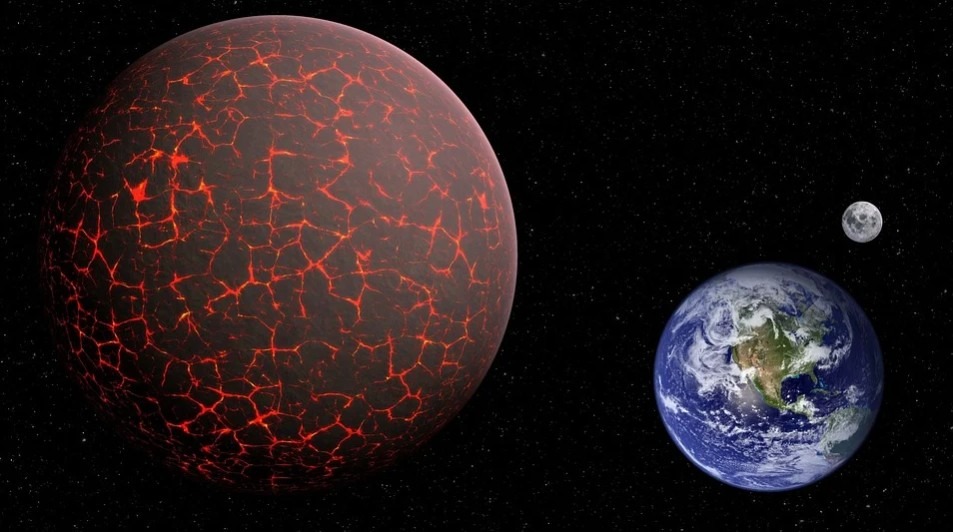
What Is Nibiru and Why Do People Think It Will Destroy Earth?
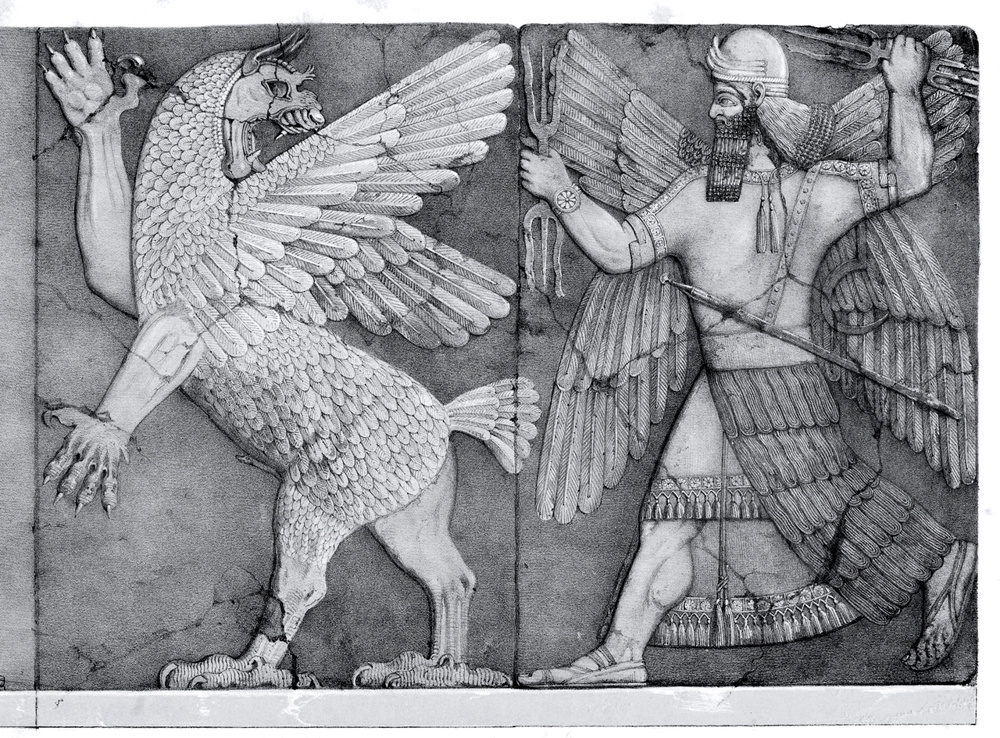
In ancient Mesopotamian texts dating back 5,000 years, Nibiru was an Akkadian term meaning "crossing" or "place of transition". A celestial reference point that Babylonian astronomers most commonly associated with Jupiter or sometimes Mercury. Today's doomsday theories bear little resemblance to these ancient myths. In ancient Babylonian cosmology, Nibiru was considered the seat of the supreme deity who shepherded the stars like a flock.
In 1995, Nancy Lieder claimed extraterrestrial contact through a brain implant and warned that a planet-sized object would trigger catastrophic pole shifts, destroying civilization. She initially predicted this for May 2003, though she's postponed the date repeatedly.
Zecharia Sitchin proposed Nibiru follows a 3,630-year orbit and connected it to the Anunnaki, an alleged alien race. These modern myths merged ancient astronomical terminology with apocalyptic predictions. This transformed a Babylonian reference point into an internet phenomenon predicting earthquakes, tidal waves, and volcanic eruptions.
What Astronomers Found When Searching for Nibiru: Zero Evidence
Despite decades of apocalyptic predictions, astronomers have found absolutely nothing to support Nibiru's existence. You won't find any scientific evidence because such a massive object approaching Earth would be easily visible to the naked eye and would destabilize planetary orbits—effects we'd observe today.
Most "Nibiru" photographs are actually lens flares, while others show distant stars like V838 Mon, located 19,000 light-years away. The academic rejection of Nibiru claims is absolute: space probe trajectories show no gravitational anomalies, and supposed planetary orbit discrepancies vanished once astronomers corrected Neptune's mass calculations in 1992.
However, despite this comprehensive debunking, the persistent popularity of Nibiru myth continues online, fueled by misidentified images and conspiracy theories that ignore basic astronomy. While astronomers have indeed hypothesized many planets beyond Neptune, these theoretical objects would remain well beyond Neptune throughout their orbit, never posing any threat to Earth.
How Nancy Lieder's 2003 Doomsday Prediction Launched Modern Nibiru Fears
The modern Nibiru phenomenon traces back to a single Wisconsin woman who claimed aliens had installed a communication device in her brain. Nancy Lieder launched ZetaTalk in 1995, predicting that Planet X would stop Earth's rotation for 5.9 days on May 27, 2003, triggering a catastrophic pole shift.
Unpacking Lieder's discredited predictions reveals a pattern of failed forecasts, including her claim that Hale-Bopp comet was "a distant star" designed to distract from Nibiru's approach. When the 2003 date passed uneventfully, she'd simply told a "white lie" to deceive authorities.
This refusal to acknowledge failure explains the longevity of Nibiru conspiracy theory. Believers can't definitively disprove claims that constantly shift, allowing the mythology to persist despite zero astronomical evidence.

How Fake Nibiru Photos Go Viral Using Lens Flares and Google Sky
When sunlight hits your smartphone camera at just the right angle, the resulting lens flare creates a glowing orb that's become Nibiru's most convincing "evidence." These optical artifacts—spherical or polygonal light patterns generated by internal reflections within camera lenses. This appears in thousands of amateur photographs each year, consistently positioned near the sun's disk.
A 2012 Daily Telegraph article documented this confusion, noting blobs beside the sun were interpreted as "the deadly planet, not a reflection." Despite amateur telescope blind spots near the sun during daylight, professional systems like Pan-STARRS capture 1.4 gigapixel images every night, detecting asteroids far smaller than any theoretical planet.
NASA's robust Nibiru detection capabilities have tracked thousands of asteroids across decades. However, it produces zero planetary evidence—while lens flares generate identical "discoveries" daily. If Nibiru existed at the distances claimed by believers, it would be as bright as Mars in the night sky, visible to anyone with functioning eyes.
Why the September 2017 Nibiru Apocalypse Failed to Materialize
Lens flares weren't the only digital phenomenon keeping Nibiru alive in 2017—numerology brought the conspiracy to its viral peak. David Meade claimed September 23 held biblical significance because it fell 33 days after a U.S. solar eclipse, matching Jesus's age.
His YouTube video accumulated over 2 million views, showcasing social media amplification of fringe theories at its finest. When nothing happened, you witnessed classic failed prophecy marketing strategies: Meade shifted to October 15, then others pushed November 19.
Theorists retroactively claimed Mexico's September 19 earthquake validated their predictions, despite occurring before the supposed event. NASA had debunked Nibiru years earlier, explaining any massive planet would be visible to your naked eye and disrupt planetary orbits. The theory simply recycled predictions from 2003, 2011, and 2012. Terral Croft joined the bandwagon, citing USGS data to predict a "quake-pocalypse" that would devastate the eastern United States and Canada.
The 3 Engines That Keep Nibiru Alive
Nibiru persists because it has three repeatable engines that don’t require proof—just momentum.
Engine 1: Visual “evidence” that looks convincing at a glance.
Most viral Nibiru posts rely on misidentified photos: lens flares, reflections, sensor artifacts, or screenshots taken out of context. The point isn’t accuracy. The point is shareability. A glowing orb near the sun + a red circle + “WHY IS NO ONE TALKING ABOUT THIS?” is an algorithm-friendly format.
Engine 2: A flexible timeline that can always be reset.
Failed prophecy is usually where a prediction dies. Nibiru survives because the timeline is endlessly editable. When the date passes, the explanation shifts: “they moved the date,” “NASA hid it,” “it was a near miss,” “it’s here spiritually,” “it triggered disasters indirectly.” The story never has to end—just update.
Engine 3: A villain that makes absence of evidence feel like evidence.
No photos? That’s the cover-up. No orbit disruption? That’s the data being hidden. No telescope confirmation? That’s censorship. The theory is built so that mainstream denial doesn’t weaken it—it powers it. This is why Nibiru is sticky: it’s not one claim. It’s a system that converts contradictions into fuel.
Check out MrPopCulture.com and learn more about pop culture trends in Planet X.
The Science Reality Check (In Plain Language)
You don’t need a PhD to understand why astronomers reject Nibiru-as-doomsday. If a massive object were anywhere near the inner solar system on a path that threatens Earth, we would expect at least three obvious things:
- It would be visible in the sky if it were as close as viral posts imply—especially over time, as it “approaches.”
- Its gravity would leave fingerprints—subtle (or not subtle) changes in the orbits of planets and the paths of spacecraft.
- Multiple independent observers—amateur astronomers included—would be able to track it consistently, not just via one-off clips and screenshots.
That’s the core issue: the Nibiru story needs the planet to be close enough to cause panic but hidden enough to avoid verification. Physics doesn’t really allow that sweet spot.
Planet Nine vs. “Planet X”: Why Real Science Keeps Getting Dragged In
Nibiru thrives partly because real space headlines keep handing it new costumes. When astronomers discuss a hypothetical “Planet Nine” far beyond Neptune, conspiracy content often collapses that into “Planet X confirmed.”
But the Planet Nine idea (as presented by scientists) is basically the opposite of the Nibiru myth. It’s proposed as a distant object that might explain odd clustering in far-out orbits. It’s not barreling toward Earth. It’s not arriving on a doomsday date. It’s not a surprise guest star in the inner solar system. This is one of Nibiru’s smartest survival tricks: it “borrows” legitimacy from real scientific vocabulary—planet searches, telescope projects, orbital modeling—then swaps in an apocalyptic plot.
Why Smart People Fall for Nibiru Despite Contradictory Evidence
Intelligence alone doesn't protect you from believing in Nibiru—in fact, the conspiracy theory's architecture specifically exploits cognitive biases that affect educated people. The psychological appeal operates through:
- Confirmation bias amplification: With 2 million websites reinforcing Nibiru narratives, you'll find "evidence" supporting pre-existing beliefs while dismissing contradictory data.
- Unfalsifiable claim structure: Absence of visual proof becomes "evidence" of NASA's cover-up rather than non-existence, making the theory immune to debunking.
- Pattern recognition misapplication: Connecting unrelated events (Hale-Bopp, Elenin, earthquakes) creates compelling narratives that feel intellectually satisfying. Scientists have demonstrated that plate tectonics, not comets, cause earthquakes, yet conspiracy theorists continue to attribute seismic activity to celestial bodies.
- Authority substitution: When traditional sources seem untrustworthy, alternative "experts" like Sitchin (despite scholarly debunking) fill the credibility gap.
Conclusion
That beat-drop feeling you get from a good thriller—“wait, what if this is the secret reason for everything?”—is the exact sensation Nibiru sells. It turns the sky into a plot device and the internet into a writers’ room where every lens flare can become a prophecy if the caption is dramatic enough.
Nibiru will probably keep returning, not because a rogue planet is coming, but because the attention economy keeps rewarding stories that feel bigger than life. The real question isn’t “Is Nibiru real?” The question is: what kinds of stories does the internet keep paying to resurrect?